
Risk Management

Thermostatic mixing valves (TMVs) play a vital role in protecting people from scalding and supporting safe water management in workplaces.
As a business owner, you have legal duties to ensure TMVs are installed, maintained and tested correctly. UK regulations require you to control water temperatures safely, both to prevent injury and to reduce risks such as legionella.
Complying with these rules is a legal responsibility under health and safety law. From healthcare settings where TMV3 valves are mandatory, to commercial buildings where regular testing and maintenance are essential, you need to know about your legal obligations. Knowing what the law expects helps you avoid compliance failures that could lead to fines or prosecution.
Here, we explain the key UK regulations, outline what you need to do to stay compliant and answer common questions about TMV installation and upkeep.
Key TMV regulations and legal requirements
Thermostatic mixing valves are controlled by a mix of regulations that set out how they must be installed, maintained and tested. These rules protect users from scalding, ensure water hygiene and help you meet your legal duties as a business owner or manager.
Overview of TMV regulations in the UK
In the UK, you must follow TMV regulations to ensure safe hot water delivery and compliance.
The Water Supply (Water Fittings) Regulations 1999 apply to all plumbing systems. They require fittings, including thermostatic mixer valves, to prevent waste, misuse or contamination of water. Compliance is usually demonstrated through WRAS approval from the Water Regulations Advisory Scheme.
The Building Regulations Part G also plays a key role. It sets maximum hot water outlet temperatures to reduce the risk of scalding. For example, water coming out of the tap in baths in new homes must not exceed 48°C. It is recommended that hot water temperatures remain between 39°C and 43°C in other areas, like hand-washing and kitchen sinks.
Industry guidance such as HSG 274 Part 2 and the TMVA code of practice outline inspection and maintenance requirements. These documents stress the need for regular TMV servicing, testing and cleaning to keep valves safe and effective.
Key points to follow:
- Install TMVs in line with Regulation 3.66 of the Water Fittings Regulations.
- Ensure products carry WRAS approval.
- Keep installation and maintenance records as evidence of compliance.
British standards for thermostatic mixing valves
Thermostatic mixing valves must meet recognised British standards to be considered safe and reliable. The two most common are:
- BS EN 1111 – covers TMVs for high-pressure systems.
- BS EN 1287 – covers TMVs for low-pressure systems.
These standards set out requirements for accuracy, durability and resistance to temperature fluctuations. By choosing valves tested to these standards, you ensure consistent performance and compliance with UK regulations.
In addition, the TMVA (Thermostatic Mixing Valve Association) provides a code of practice that aligns with these standards. It recommends installation, commissioning and maintenance procedures that help you meet both legal and safety requirements.
Using valves that comply with BS EN standards reduces the risk of scalding and ensures your system operates as intended. It also makes inspections and audits easier, as compliance can be demonstrated through certification.
Sector-specific compliance: healthcare and residential
Healthcare premises have stricter requirements due to the vulnerability of patients. The Health Technical Memorandum (HTM 04-01) requires the use of type 3 TMVs in hospitals, care homes and similar settings. These valves are tested to higher safety standards and must be regularly maintained to prevent scalding and control legionella risks.
In residential accommodation, compliance focuses on Part G of the Building Regulations, which limits hot water temperature in bath taps to 48°C in new homes. TMVs are the standard method for achieving this. Landlords and housing providers also have a duty of care to ensure safe hot water systems for tenants.
Comparison of requirements:
| Setting | Key Regulation/Guidance | TMV Requirement |
| Healthcare | HTM 04-01 | Type 3 TMVs, strict testing |
| Residential (new) | Building Regulations Part G | Max 48°C bath outlet via TMV |
| General buildings | Water Fittings Regulations | WRAS-approved TMVs |
By following these sector-specific rules, you reduce legal risks and ensure safe water delivery across different types of buildings.
Business obligations for TMV installation, maintenance, and safety
You must take clear steps to manage hot and cold water systems safely. This includes assessing risks, installing thermostatic mixing valves (TMVs) correctly, keeping them in good working order and controlling the growth of harmful bacteria such as legionella.
Risk assessment and water safety planning
You are legally required to carry out a risk assessment of your hot water system under the Health and Safety Executive’s Approved Code of Practice (ACoP L8). This assessment forms part of your wider water safety plan, which should be managed by a Water Safety Group in larger or higher-risk premises.
Your plan should identify who may be at risk of scalding or infection, such as children, elderly residents or hospital patients. It must also review the design of your hot and cold water systems, including the use of TMVs at hot water outlets.
HSG274 Part 2 provides guidance on controlling legionella in hot and cold water systems. You should follow its recommendations for monitoring, inspection and record keeping. This includes microbiological monitoring where needed, along with checks on temperature regimes to ensure water is stored and distributed safely.
Documenting findings and actions is essential. Regulators may ask to see your records to confirm that you are managing risks correctly.
TMV installation best practice
Correct installation of TMVs is key to safety and compliance. Valves should be selected based on the environment, for example Type 3 TMVs for healthcare and social care settings, as required by the Department of Health’s technical guidance.
You must ensure valves are installed as close as possible to the hot water outlets they serve. This reduces the length of pipework carrying mixed water, which helps lower the risk of bacterial growth.
Good practice also requires the use of valves with a reliable shut-off mechanism. This ensures that if the cold supply fails, the valve will prevent scalding by cutting off the hot water flow.
Ongoing maintenance, testing and servicing requirements
Once installed, TMVs must be inspected, tested and serviced at regular intervals. The frequency depends on the setting, but in healthcare and care homes, in-service testing is often required every 6 to 12 months.
Testing should confirm that the valve delivers water at the correct temperature, typically between 39°C and 43°C depending on the outlet. You should also check the valve’s thermal shock response and verify that the shut-off mechanism works correctly.
Cleaning and descaling are also important. Build-up of scale or debris can affect valve performance and increase the risk of legionella. You should follow manufacturer instructions and keep detailed maintenance records.
It’s best to enlist professional safety services who can thoroughly carry out TMV calibration, repairs, testing and cleaning to help you remain compliant with TMV regulations in the UK.
Aqua Compliance’s TMV servicing takes care of everything, with remedial recommendations and documentation for your compliance and peace of mind.
Managing water hygiene and legionella risks
TMVs play a key role in water hygiene, but they can also create favourable conditions for legionella bacteria if not managed properly. Warm mixed water left in pipework may support bacterial growth, so you should minimise pipe runs and flush outlets regularly.
Your water treatment and equipment strategy should include temperature monitoring, disinfection where needed and effective flushing regimes. For example, hot water should be stored at 60°C or higher, while cold water should be kept below 20°C.
Legionella risk assessments should be reviewed whenever there are changes to the hot water system, such as new outlets or alterations to supply. You may also need microbiological and temperature monitoring if your risk assessment identifies vulnerable users.
By combining correct TMV management with strong water hygiene controls, you can protect users from both scalding and waterborne infections.
Frequently asked questions
UK businesses must follow strict rules to adhere to water safety and hygiene regulations. Here, we’ve answered some of the most commonly asked questions around TMVs and your compliance with water regulations.
What are the legal requirements for TMV installation in the UK?
You have a legal duty to control water temperatures to prevent injury and reduce risks like legionella. Key regulations include the Water Supply (Water Fittings) Regulations 1999, which require fittings to prevent contamination and misuse, and Building Regulations Part G, which sets maximum hot water temperatures. You need to install WRAS-approved TMVs and maintain detailed installation and maintenance records.
How often do I need to test and service TMVs to comply with UK regulations?
The frequency of testing depends on the setting and level of risk. In high-risk environments like healthcare and care homes, in-service testing is often required every 6 to 12 months. This testing confirms the valve delivers water at the correct temperature (typically 39°C to 43°C) and that the shut-off mechanism works correctly. You should also regularly clean and descale the valves to ensure they function properly and don’t contribute to bacterial growth.
What is the difference between TMV2 and TMV3 valves and which one do I need?
TMV2 and TMV3 are different standards that valves are tested to. TMV2 valves are designed for commercial and residential use, typically required to meet Building Regulations Part G. TMV3 valves are specifically for healthcare and social care settings as required by the Health Technical Memorandum (HTM 04-01). They are tested to a higher safety standard for environments with more vulnerable users.
How do TMVs help with legionella control and what are the regulations?
TMVs play a dual role in water safety. While they prevent scalding by mixing hot and cold water at the point of use, they can also create a risk for legionella if not managed correctly. To control legionella, hot water systems must store water at 60°C or higher and cold water at below 20°C, as outlined in HSG274 Part 2. TMVs must be installed as close as possible to the outlet to minimise the length of mixed water pipework, where bacteria can thrive. Regular testing and flushing are also essential.
What is WRAS approval and why is it important for TMVs?
WRAS approval is a certification from the Water Regulations Advisory Scheme. It’s a way of proving that a water fitting, like a TMV, complies with the Water Supply (Water Fittings) Regulations 1999. It ensures the product won’t waste, misuse or contaminate the public water supply. Using a WRAS-approved TMV is a legal requirement for most installations in the UK, demonstrating that your system meets the necessary safety and hygiene standards.
Discover the Latest Blogs
Stay informed with our informative blog posts and articles.
All blogs
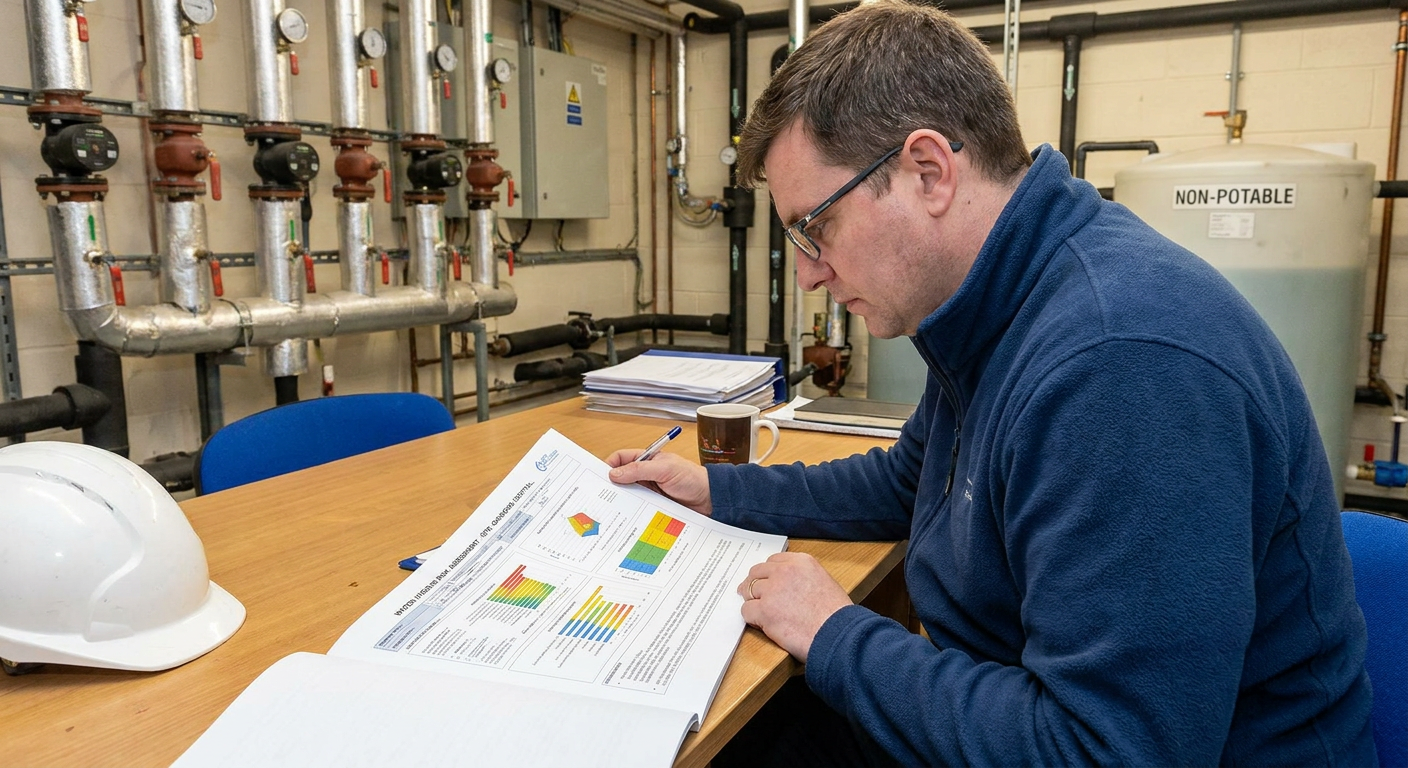
How to Read a Water Hygiene Report
A water hygiene report should not just be filed away. It should help you understand what is happening across your water systems, what risks exist, and what actions need to be taken. HSE’s ACOP L8 is aimed at dutyholders and covers identifying and assessing risk, preparing a scheme to prevent or control risk, implementing and monitoring precautions, keeping records, and
Why Compliance Should Be Proactive, Not Reactive
In water hygiene and Legionella compliance, timing is everything. Too often, action is taken after something goes wrong – a failed audit, a temperature issue, or a gap in records. But by then, the risk has already existed for some time. The difference between reactive and proactive compliance is simple: Reactive compliance manages problems.Proactive compliance prevents them. And in complex

The Top 5 Water Hygiene Risks in Commercial Buildings
When it comes to Legionella compliance, the biggest risks aren’t always the obvious ones. In fact, most issues we see come from small, everyday gaps that go unnoticed over time. Understanding these risks is the first step to controlling them. 1. Inconsistent Temperature Control Hot and cold water systems depend on maintaining the correct temperatures. When checks are missed or