
Risk Management
A water hygiene report should not just be filed away.
It should help you understand what is happening across your water systems, what risks exist, and what actions need to be taken.
HSE’s ACOP L8 is aimed at dutyholders and covers identifying and assessing risk, preparing a scheme to prevent or control risk, implementing and monitoring precautions, keeping records, and appointing a responsible person.
1. Start with the engineer’s visit summary
This section should tell you:
- What was inspected or monitored
- Whether any issues were found
- What actions are required
- How urgent those actions are
Look for clear wording, not just technical data.
2. Review temperature results
Temperature results are one of the most important sections.
Check whether:
- Cold water is being maintained below 20°C where possible
- Hot water is stored at 60°C or above
- Hot water reaches 50°C within one minute at outlets
- Healthcare premises meet the higher 55°C outlet expectation
These temperature benchmarks are set out in HSE guidance for hot and cold water systems.
3. Look for repeated failures or trends
One failed reading matters.
Repeated failures matter even more.
Ask:
- Is the same outlet failing regularly?
- Are issues happening in one area of the building?
- Are failures linked to low-use outlets?
- Are corrective actions being closed out?
4. Check recommendations and actions
A good report should clearly explain:
- What needs doing
- Why it matters
- Who is responsible
- The priority level
- Whether the action is complete or outstanding
Avoid letting reports become a list of unresolved actions.
5. Review asset and outlet information
The report should reflect the current site.
Check:
- Are all relevant outlets included?
- Are sentinel outlets identified?
- Are TMVs, tanks, calorifiers, showers, and low-use outlets captured?
- Has anything changed on site since the last report?
HSE notes that dutyholders need to understand the type, operation, and key parts of their water system, including sentinel outlets, TMVs, dead legs and dead ends.
6. Check evidence of control
The report should help prove that risks are being managed.
Look for:
- Completed monitoring records
- Failed results with corrective actions
- Flushing records
- Cleaning and disinfection records
- Outstanding remedial actions
- Review notes
HSE guidance says a competent person should routinely check, inspect, and clean the system in accordance with the risk assessment.
Key message for facilities managers
A water hygiene report is not just compliance paperwork.
It is a management tool.
Read properly, it helps you spot risk, track actions, challenge gaps, and stay in control of your water hygiene responsibilities.
Discover the Latest Blogs
Stay informed with our informative blog posts and articles.
All blogs
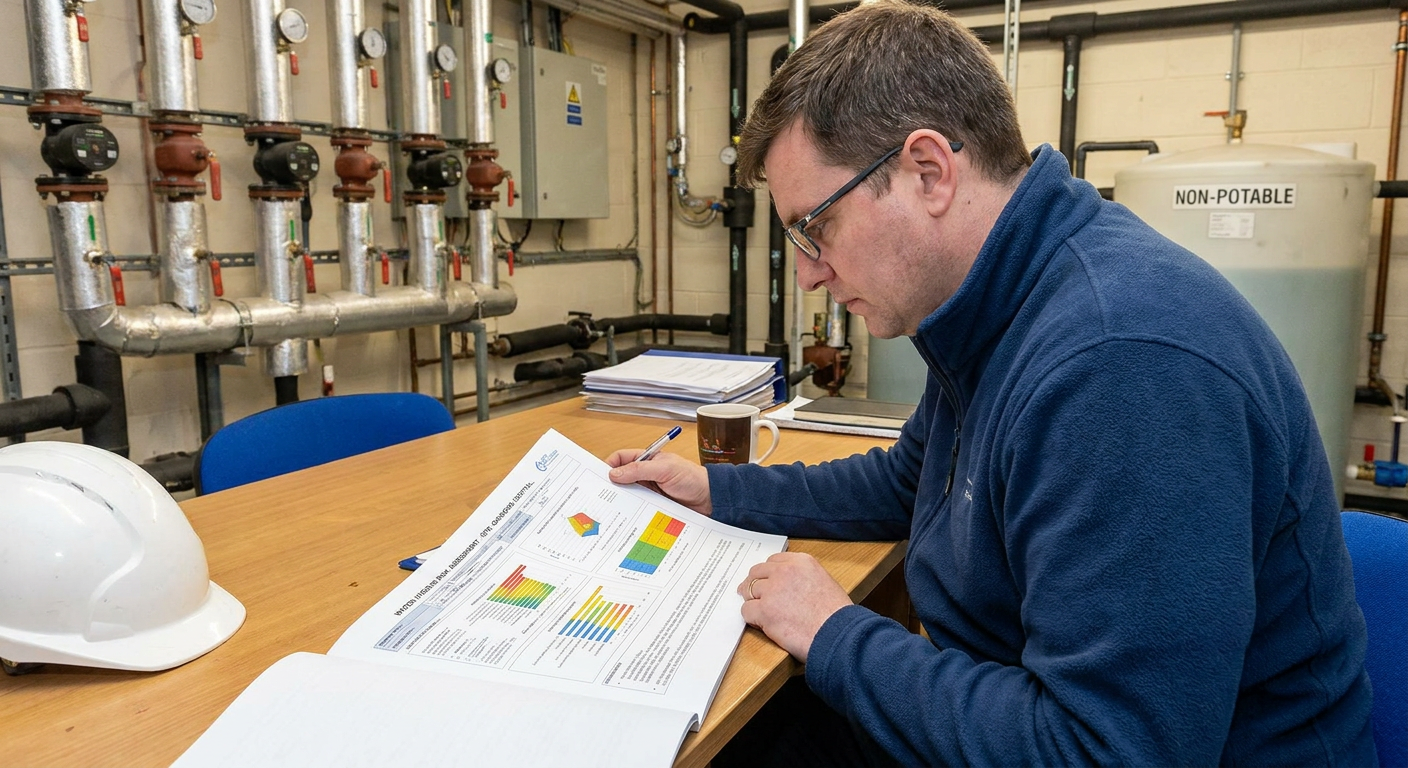
How to Read a Water Hygiene Report
A water hygiene report should not just be filed away. It should help you understand what is happening across your water systems, what risks exist, and what actions need to be taken. HSE’s ACOP L8 is aimed at dutyholders and covers identifying and assessing risk, preparing a scheme to prevent or control risk, implementing and monitoring precautions, keeping records, and

Why Compliance Should Be Proactive, Not Reactive
In water hygiene and Legionella compliance, timing is everything. Too often, action is taken after something goes wrong – a failed audit, a temperature issue, or a gap in records. But by then, the risk has already existed for some time. The difference between reactive and proactive compliance is simple: Reactive compliance manages problems.Proactive compliance prevents them. And in complex

The Top 5 Water Hygiene Risks in Commercial Buildings
When it comes to Legionella compliance, the biggest risks aren’t always the obvious ones. In fact, most issues we see come from small, everyday gaps that go unnoticed over time. Understanding these risks is the first step to controlling them. 1. Inconsistent Temperature Control Hot and cold water systems depend on maintaining the correct temperatures. When checks are missed or