
Risk Management
Understanding Your Legionella Risk Assessment: What It’s Really Telling You
Legionella risk assessments are a legal requirement for many businesses, but they are often misunderstood. For facilities managers, building owners, and duty holders, a legionella risk assessment is far more than a compliance document; it’s a practical roadmap for controlling risk and protecting people.
In this blog, we break down what your legionella risk assessment is really telling you, how to interpret it, and the actions you should take as a result.
What Is a Legionella Risk Assessment?
A legionella risk assessment is a structured evaluation of a building’s water systems to identify the risk of Legionella bacteria developing and spreading. Legionella thrives in warm, stagnant water and can be transmitted through inhalation of contaminated aerosols, such as those from showers, taps, cooling systems, and certain plant equipment.
In the UK, legionella risk assessments are required under the Health and Safety at Work etc. Act 1974 and the Control of Substances Hazardous to Health (COSHH) Regulations. The HSE’s Approved Code of Practice L8 (ACOP L8) provides guidance on how duty holders should manage and control legionella risks.
What Your Assessment Is Really Assessing
A good legionella risk assessment looks beyond surface-level checks. It evaluates several critical factors that influence bacterial growth and exposure.
Water temperature control
Legionella bacteria multiply most rapidly between 20°C and 45°C. Your assessment will highlight where hot or cold water temperatures fall within this danger zone, flagging areas where temperature control is inadequate.
Water stagnation
Low-use outlets, dead legs, oversized systems, or infrequently used buildings increase stagnation risk. The assessment identifies where water is not circulating effectively.
System design and condition
Poor system design, corrosion, scale, and biofilm all create environments where legionella can thrive. Your assessment will point out design flaws or maintenance issues that elevate risk.
Aerosol generation
Any outlet that produces fine water droplets — such as showers, spray taps, or cooling equipment — is assessed for its potential to transmit bacteria to users.
Understanding Risk Ratings and Priorities
Legionella risk assessments typically include a risk rating or priority scoring. These are not arbitrary numbers; they are designed to help you act.
- High-risk findings usually require immediate corrective action, such as temperature failures, heavily scaled outlets, or unmanaged systems.
- Medium-risk findings may involve procedural gaps, like inconsistent flushing or incomplete records.
- Low-risk findings still require monitoring and inclusion in your written control scheme.
The key takeaway: a risk assessment that sits on a shelf is not managing risk. It should actively inform your maintenance schedule, investment decisions, and operational controls.

Your Written Scheme of Control
Your legionella risk assessment should feed directly into a written scheme of control — a living document that outlines who is responsible for what, how risks are controlled, and how often tasks are carried out.
This typically includes:
- Temperature monitoring regimes
- Flushing schedules
- Cleaning and descaling frequencies
- Training and competency requirements
- Record-keeping processes
If your assessment identifies actions but your written scheme does not reflect them, you are exposed to both health and compliance risks.
How Often Should You Review It?
Legionella risk assessments are not one-and-done. They should be reviewed regularly and whenever there are significant changes, such as:
- Alterations to the water system
- Changes in building use or occupancy
- Extended shutdowns or low occupancy periods
- A change in responsible personnel
Although not legally mandated, Industry best practice often suggests a review at least every 2 years, or sooner if circumstances or system changes occur.
Turning Insight Into Action
The true value of a legionella risk assessment lies in how it is used. When properly understood, it becomes a practical tool that helps facilities managers prioritise actions, allocate resources effectively, and demonstrate due diligence.
If you’re unsure whether your current legionella risk assessment reflects your system accurately — or whether the findings have been fully actioned — our team can help. Aqua Compliance provides comprehensive legionella risk assessments and ongoing compliance support to ensure your water systems remain safe, compliant, and properly managed.
👉 Get in touch to review your current assessment or arrange a site survey.

FAQs
1. How often should a legionella risk assessment be reviewed?
A Legionella risk assessment should be reviewed regularly and whenever there is a significant change to the water system or building use. Although not legally mandated, industry best practice is to review it at least every two years, or sooner if there are system modifications, changes in occupancy, or prolonged periods of low water usage.
2. Who is responsible for acting on a legionella risk assessment?
The duty holder — often the building owner, employer, landlord, or managing agent — is legally responsible for ensuring that the findings of a legionella risk assessment are acted upon. This includes implementing control measures, maintaining a written scheme of control, and ensuring monitoring and record-keeping are carried out correctly.
3. What happens if issues identified in a legionella risk assessment are not addressed?
Failing to act on identified risks can lead to increased health risks, non-compliance with ACOP L8 and COSHH regulations, and potential enforcement action by the HSE. In the event of an outbreak or inspection, unaddressed findings may also invalidate insurance and demonstrate a lack of due diligence.
Discover the Latest Blogs
Stay informed with our informative blog posts and articles.
All blogs
How to Read a Water Hygiene Report
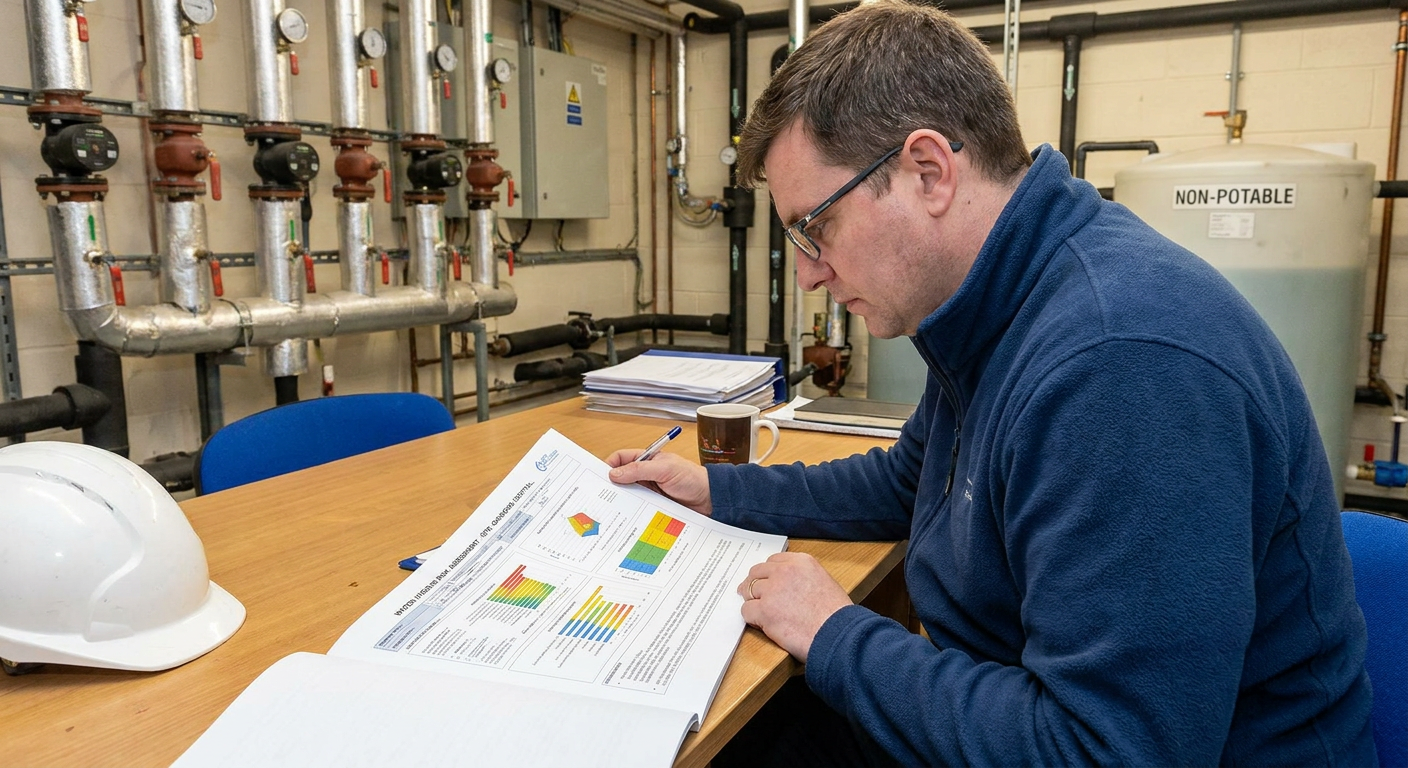
A water hygiene report should not just be filed away. It should help you understand what is happening across your water systems, what risks exist, and what actions need to be taken. HSE’s ACOP L8 is aimed at dutyholders and covers identifying and assessing risk, preparing a scheme to prevent or control risk, implementing and monitoring precautions, keeping records, and
Why Compliance Should Be Proactive, Not Reactive
In water hygiene and Legionella compliance, timing is everything. Too often, action is taken after something goes wrong – a failed audit, a temperature issue, or a gap in records. But by then, the risk has already existed for some time. The difference between reactive and proactive compliance is simple: Reactive compliance manages problems.Proactive compliance prevents them. And in complex

The Top 5 Water Hygiene Risks in Commercial Buildings
When it comes to Legionella compliance, the biggest risks aren’t always the obvious ones. In fact, most issues we see come from small, everyday gaps that go unnoticed over time. Understanding these risks is the first step to controlling them. 1. Inconsistent Temperature Control Hot and cold water systems depend on maintaining the correct temperatures. When checks are missed or