
Risk Management

Businesses and landlords need to take water risks seriously to protect staff, customers and operations. A water risk assessment helps you find and manage dangers like pollution and bacteria, keeping your business safe and compliant. Even simple mistakes can lead to health hazards or costly legal troubles, so staying informed and prepared is essential.
By learning how to spot risks and put safety plans in place, you lower the chance of problems and improve your business’ resilience. From understanding legal responsibilities to knowing about the dangers of legionella, you can make educated choices that protect everyone involved. Start making water safety a top priority with the clear, practical steps our water hygiene experts will outline in this article.
Understanding water risk assessments for businesses
Water risk assessments help you identify potential dangers in your water systems. These assessments achieve this by focusing on safety, your legal obligations and the prevention of bacteria like legionella.
What is a water risk assessment?
A water risk assessment is a process where you examine the safety and management of your water systems. It helps you spot risks like contamination, bacterial growth or disruptions in supply. You look at each part of your water system: pipes, hot and cold water tanks, outlets and more.
The goal is to keep water clean and safe for anyone using your premises. A good assessment will include a review of past problems, how water is stored and how often systems are checked or cleaned. This is important for buildings with complex systems, such as offices, factories and hospitals.
Experts in water hygiene like Aqua Compliance can help you perform a detailed review, ensuring a thorough review with no stone left unturned. This supports compliance and helps you take action before problems occur.
Importance of water safety and compliance
Keeping water safe is a legal and health priority. If water systems are not managed well, bacteria such as legionella can grow in pipes, tanks or stagnant water. Legionella causes Legionnaires’ disease, a severe form of pneumonia.

Compliance with regulations requires you to assess, control and monitor water hygiene. Regular checks protect staff, customers, residents and visitors while avoiding legal penalties and harm to your reputation. Businesses must act to prevent conditions suitable for bacterial growth, such as maintaining stored hot water above 60°C and avoiding water stagnation.
Consulting water hygiene specialists is important when making sure your systems meet national safety standards. Failure can lead to fines, closure or outbreaks of illness.
Types of water risk and hazards
Water risks can come from physical, chemical and biological sources. Biological risks often involve bacteria like legionella, which thrive in warm, unused water. Stagnant water in underused pipes or poorly maintained tanks increases this hazard.
Other risks include contamination from rust, debris, or chemicals that enter the system. Cross-connections between potable and non-potable water lines can cause serious contamination issues. Physical hazards include ageing pipes, leaks and poorly designed water storage, all of which increase risk.
Key hazards to monitor:
| Hazard type | Example | Risk factor |
| Biological | Legionella bacteria | Stagnant water, warm temps |
| Chemical | Heavy metals, cleaning agents | Poor system maintenance |
| Physical | Broken, leaking or old pipes | Outdated infrastructure |
Regular review and prevention plans keep these risks under control.
Legal and regulatory frameworks
Businesses in the UK are regulated by strict laws on water safety. UK health and safety laws and water legislation require you to assess, monitor, and manage risks in your water system.
You must keep records, document risk management actions and carry out regular reviews and monitoring. If you supply water to others, you have extra duties to protect their safety. Failing to comply can lead to legal action, financial penalties or the closure of your premises.
Companies should consult water hygiene specialists like Aqua Compliance to stay up to date with the latest standards and legal updates. Keeping your business compliant is important for protecting both people and your operations.
Implementing and optimising water risk management
Good water risk management helps you control hazards like legionella, meet legal requirements and protect health. You need clear procedures, targeted testing and regular reviews to keep your water safe and systems running smoothly.
Steps to conduct a comprehensive water risk assessment
Begin by gathering details about your water system type. Identify all water storage containers, tanks, hot water systems and water supply points. Pay close attention to high-risk areas like cooling towers, hot water storage vessels and instantaneous water heaters.
Map out how water flows through your building. List all points where water could be used, such as taps, showers and industrial processes. You’ll also want to review previous water tests and system records for signs of bacteria, corrosion or other hazards.

Next, arrange a thorough water hygiene risk assessment. This often involves monitoring water temperatures and testing for bacteria such as legionella. Use tools like legionella water sampling for reliable results. The findings will help you understand where risks lie and which areas need the most urgent action.
If you’re not fully versed on water hygiene or you haven’t carried out a risk assessment before, it’s best to leave it to the experts. Water treatment and hygiene businesses know exactly what to look for and provide a thorough assessment that might not be possible with in-house resources.
Key components of water management systems
A good water management system has several parts. It establishes procedures for regular water monitoring, water testing, and maintenance. You need accurate logs to record each test and any fixes made.
Set up a Water Safety Group meeting at regular intervals if you’re working in healthcare. This group oversees your water safety plan, which outlines all safety measures, maintenance routines, and emergency responses. Larger or more complex sites may benefit from a Drinking Water Safety Plan to manage the risks that come with drinking water systems, especially if there are water treatment services in use.
Industry best practices for water hygiene and treatment
To lower the risk of waterborne diseases, follow strict hygiene and water treatment methods. Run a legionella control programme with regular flushing of rarely used outlets, keeping hot water above 50°C and cold water below 20°C from the outlet.
Use water treatment methods suited to your building, such as filtration, biocides or UV treatment. Owners of cooling towers or large water tanks should opt for specialist water treatment services, like cooling tower analytical services. Routine cleaning and maintenance of water storage tanks and hot water storage vessels are key steps to prevent microbial growth.
Running regular reviews and risk updates
Schedule a water risk assessment review at least once a year or when your water system changes. This could include new equipment, extensions or modifications to water usage. Each review checks if controls are working and highlights new risks, and you should document all actions, test results and changes.
Regular updates make it easier to spot trends and prevent problems before they escalate. Staying on top of reviews ensures your water safety plan remains effective and compliant with safety standards.
Frequently asked questions
Business water risk assessments must meet health and safety standards and often need regular reviews. Factors like property size, building use, water system type and staff water safety training affect what you need to do and who can perform these checks.
What are the legal requirements for conducting water risk assessments in business properties?
You are required by law to keep water systems safe in workplaces. Health and safety regulations state you must assess water-related risks, control them and keep records. In particular, if your business has a water system, tanks or showers, you need to check for risks like Legionella bacteria as part of your health and safety duties.
How frequently should businesses conduct legionella risk assessments?
You should review your legionella risk assessment at least every two years or whenever there is a significant change to your water system or building use. If your risk is higher, more frequent reviews may be needed to keep people safe and comply with legal requirements.
What are the key steps involved in performing a water risk assessment?
First, you identify possible water hazards in your building. Next, you assess who could be harmed and how. Then, you evaluate the risk level, put controls in place and keep a written record of your findings. It is also important to keep reviewing your assessment and update it when things change.
Which professionals are qualified to carry out legionella risk assessments for businesses?
Risk assessments for legionella should be done by trained and competent people. This can include water hygiene professionals or specialists with experience in water safety and legionella control, like Aqua Compliance’s highly qualified experts.
When looking for a reliable water company to carry out a legionella risk assessment, seek out businesses with an LCA membership. This membership highlights a company’s commitment to these standards and is a gold-standard mark of approval for the business’ ability to manage legionella risks. Water professionals will understand your water systems and be able to spot risks clearly.
How does the absence of occupancy, like in an empty house, affect legionella risk levels?
When a building is empty, water in the system stays still, and this can raise the risk of Legionella growth. Stagnant water and warm conditions create a better environment for bacteria. If a property is left empty, the risk assessment should be updated and extra checks or cleaning may be needed before it is used again.
What factors influence the cost of a legionella risk assessment for commercial properties?
The main factors that affect cost are the size of your building, how complex the water system is and how many outlets you have. If your site has many water tanks or is used by vulnerable people, regular and detailed checks may increase the price. Location and the qualifications of the professional also impact the final cost.
Discover the Latest Blogs
Stay informed with our informative blog posts and articles.
All blogs
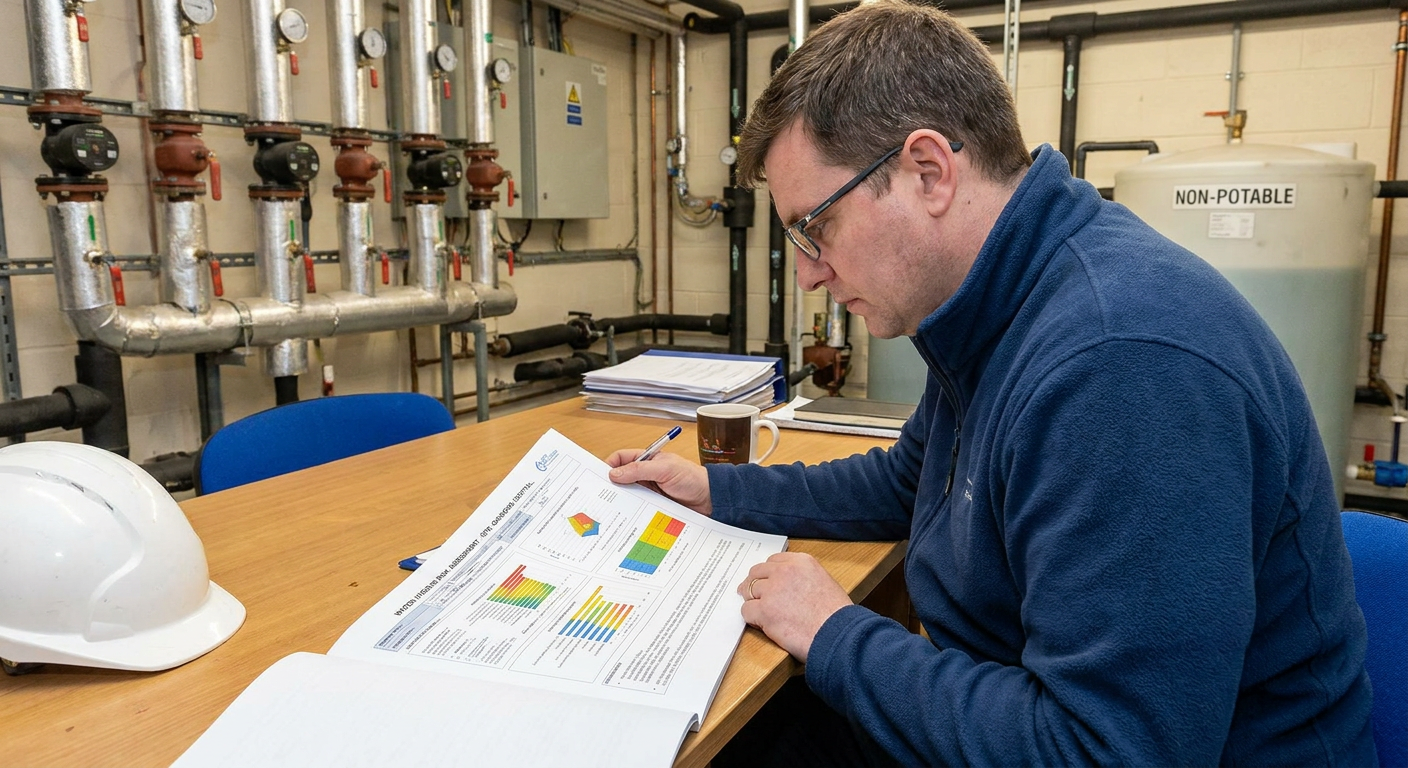
How to Read a Water Hygiene Report
A water hygiene report should not just be filed away. It should help you understand what is happening across your water systems, what risks exist, and what actions need to be taken. HSE’s ACOP L8 is aimed at dutyholders and covers identifying and assessing risk, preparing a scheme to prevent or control risk, implementing and monitoring precautions, keeping records, and
Why Compliance Should Be Proactive, Not Reactive
In water hygiene and Legionella compliance, timing is everything. Too often, action is taken after something goes wrong – a failed audit, a temperature issue, or a gap in records. But by then, the risk has already existed for some time. The difference between reactive and proactive compliance is simple: Reactive compliance manages problems.Proactive compliance prevents them. And in complex

The Top 5 Water Hygiene Risks in Commercial Buildings
When it comes to Legionella compliance, the biggest risks aren’t always the obvious ones. In fact, most issues we see come from small, everyday gaps that go unnoticed over time. Understanding these risks is the first step to controlling them. 1. Inconsistent Temperature Control Hot and cold water systems depend on maintaining the correct temperatures. When checks are missed or