
Risk Management


For too long, water treatment has been viewed as a necessary evil; a compliance cost tacked onto the operational budget. This perspective is fundamentally flawed. In the modern business landscape, professional water treatment is not an expense; it is a strategic investment that generates a significant Return on Investment (ROI).
Moving beyond the obvious need to avoid regulatory fines, a professional water management program is one of the most effective ways to lower operational costs, enhance efficiency, and secure the long-term viability of your assets.
Here is a breakdown of the compelling financial returns your company can expect from a best-in-class water treatment partnership.
- Maximising Equipment Lifespan and Efficiency
The single largest financial drain caused by poor water management is premature equipment failure and reduced performance. Effective water treatment directly combats the three major enemies of industrial water systems: scale, corrosion, and fouling.
- Scale Prevention: Untreated hard water leaves mineral deposits (scale) in boilers, cooling towers, and heat exchangers. Just 1mm of scale can decrease a boiler’s efficiency by 10% or more. Professional treatment eliminates this build-up, ensuring systems run at peak efficiency, which cuts energy consumption and utility bills.
- Corrosion Control: Uncontrolled water chemistry eats away at pipes and metal components. Our treatments stabilise the water, preventing leaks, system failures, and the astronomical cost of replacing major assets like entire chillers or boiler tubes.
- The ROI: Extending the life of a commercial boiler by just two years can save tens of thousands in capital expenditure and prevent expensive, unscheduled downtime.
- Drastic Reduction in Operating Costs
The right water treatment program turns costly consumption and discharge into controlled, efficient processes.
- Reduced Water & Sewer Fees: High-quality water treatment allows systems, especially cooling towers and evaporative condensers, to operate at higher Cycles of Concentration (CoC). This means the same volume of water can be reused more times before being discharged, dramatically reducing your fresh water intake and wastewater disposal volume.
- Lower Chemical Usage: Customised treatment plans use the right chemical dose for your specific water chemistry, eliminating the waste associated with ‘one-size-fits-all’ programs. Advanced monitoring systems ensure chemicals are used efficiently and accurately.
- Minimised Maintenance & Labour: With scale and corrosion under control, your maintenance teams spend less time scraping sludge, chemically cleaning equipment, or dealing with emergency repairs, allowing them to focus on preventative work.
| The Cost of Inaction | The Value of Professional Treatment |
| Emergency Shutdowns | Scheduled Preventative Maintenance |
| High Energy Bills (Due to scaled heat transfer) | Optimized Efficiency (Lower energy consumption) |
| Asset Replacement (Prematurely) | Extended Equipment Life (Deferred CAPEX) |
| Regulatory Fines (Compliance breaches) | Risk Mitigation (Guaranteed compliance & peace of mind) |
- Safeguarding Against Regulatory Fines and Risk
While compliance is a legal duty, avoiding penalties offers a clear financial return. Regulatory fines for water discharge violations or Legionella breaches can be severe and often come with additional costs for mandatory remediation.
A professional water treatment partner works in partnership with you to meet all requirements (like the HSE’s ACOP L8), turning a potential liability into predictable, controlled compliance costs. This risk mitigation provides an unquantifiable but immensely valuable return: business continuity.
- Driving Sustainability and Public Image
In a world increasingly focused on Environmental, Social, and Governance (ESG) performance, efficient water usage is an asset.
- Water Recycling & Reuse: We help you explore water recycling options, turning your wastewater from a disposal problem into a reusable resource for non-potable applications like irrigation or cooling make-up.
- Enhanced Reputation: Demonstrating a commitment to responsible water stewardship improves your brand image with customers, investors, and local communities, a competitive advantage that can translate to increased market share.
The Bottom Line: Where Does the ROI Come From?
The ROI of professional water treatment is realised through a combination of:
- Capital Deferment: Extending the life of expensive equipment.
- Efficiency Gains: Reducing energy and water consumption.
- Cost Control: Lowering chemical, labour, and maintenance costs.
- Risk Avoidance: Preventing catastrophic failures, downtime, and massive regulatory fines.
Choosing the right water treatment partner means investing in a service that pays for itself, often in a matter of months, through tangible, long-term savings.

Discover the Latest Blogs
Stay informed with our informative blog posts and articles.
All blogs
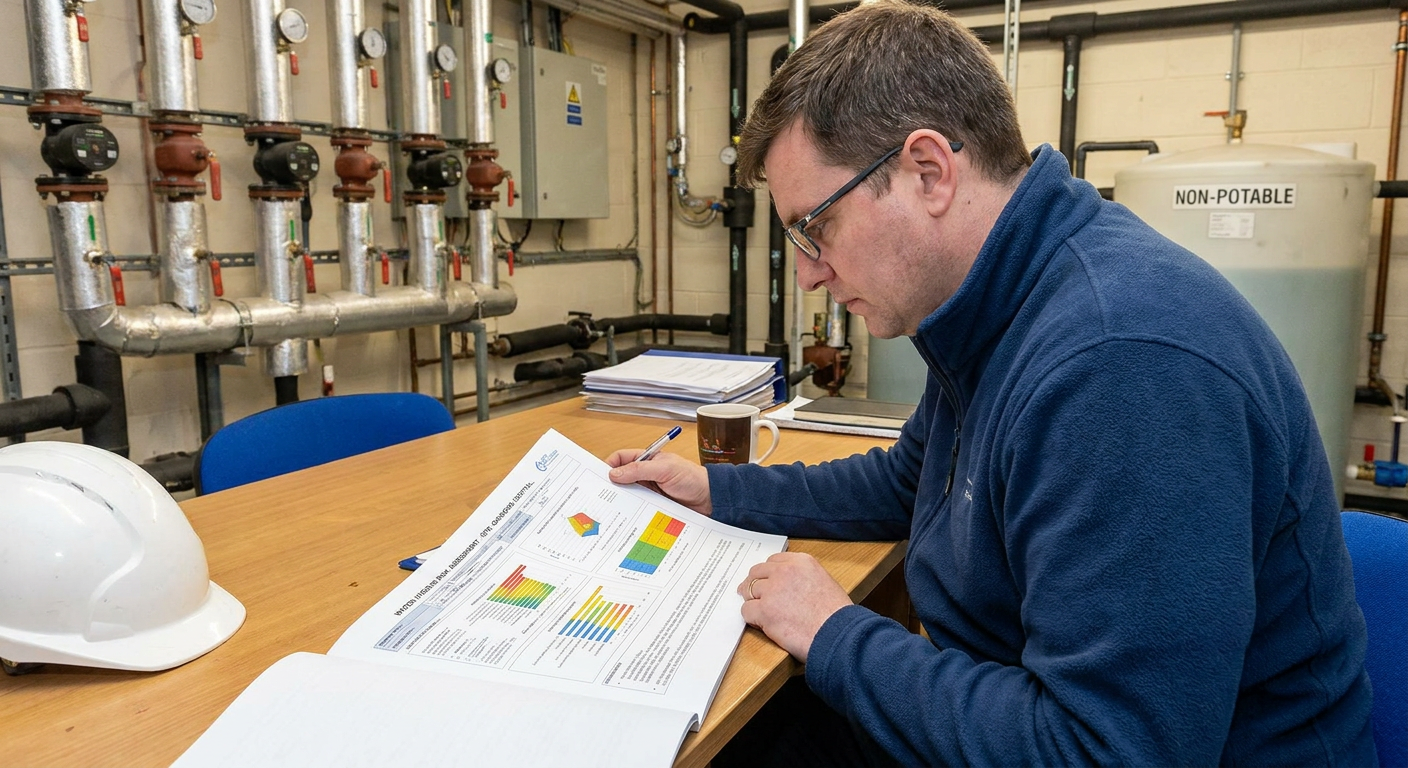
How to Read a Water Hygiene Report
A water hygiene report should not just be filed away. It should help you understand what is happening across your water systems, what risks exist, and what actions need to be taken. HSE’s ACOP L8 is aimed at dutyholders and covers identifying and assessing risk, preparing a scheme to prevent or control risk, implementing and monitoring precautions, keeping records, and

Why Compliance Should Be Proactive, Not Reactive
In water hygiene and Legionella compliance, timing is everything. Too often, action is taken after something goes wrong – a failed audit, a temperature issue, or a gap in records. But by then, the risk has already existed for some time. The difference between reactive and proactive compliance is simple: Reactive compliance manages problems.Proactive compliance prevents them. And in complex

The Top 5 Water Hygiene Risks in Commercial Buildings
When it comes to Legionella compliance, the biggest risks aren’t always the obvious ones. In fact, most issues we see come from small, everyday gaps that go unnoticed over time. Understanding these risks is the first step to controlling them. 1. Inconsistent Temperature Control Hot and cold water systems depend on maintaining the correct temperatures. When checks are missed or