
Risk Management

Legionella control is not just about maintenance — it’s about evidence. For facilities managers, keeping accurate, up-to-date legionella records is essential for demonstrating compliance, protecting occupants, and simplifying audits.
However, record-keeping is often one of the most time-consuming and inconsistent parts of legionella management. The good news? With the right approach, it can be streamlined significantly.
Why Legionella Records Matter
Legionella record-keeping is a legal requirement under ACOP L8 and COSHH. Records provide proof that control measures are in place, carried out correctly, and reviewed regularly.
In the event of an HSE inspection, insurance claim, or incident investigation, your records are often the first thing requested. Incomplete or missing documentation can undermine even well-maintained systems.
What Records You Actually Need
Facilities managers often overcomplicate legionella documentation. In reality, records should focus on clarity, consistency, and relevance.
Key legionella records typically include:
- Legionella risk assessments and reviews
- Written scheme of control
- Hot and cold water temperature monitoring logs
- Flushing records for low-use outlets
- Cleaning and disinfection reports
- Training and competency records
- Remedial action tracking
The goal is not paperwork for paperwork’s sake — it’s demonstrable control.
Common Record-Keeping Challenges
Many facilities teams struggle with:
- Paper-based logbooks that go missing or are filled inconsistently
- Multiple folders with information recorded in different places
- Multiple people recording data in different formats
- Lack of visibility across large or multi-site estates
- Time pressure leading to retrospective or incomplete entries
These issues increase compliance risk and make audits far more stressful than they need to be.
Practical Ways to Streamline Legionella Records
Standardise your processes
Use clear templates and standard operating procedures so everyone records information in the same way in the same place. This reduces errors and saves time.
Go digital where possible
Digital logbooks and monitoring platforms allow real-time data capture, automated reminders, and centralised storage. This is particularly valuable for facilities managers overseeing multiple sites.
Assign clear responsibility
Every task should have a named responsible person. This avoids duplication, missed checks, and confusion during audits.
Link records to risk
Align your record-keeping frequency with your legionella risk assessment. High-risk areas may need more frequent monitoring, while low-risk systems can be reviewed less often.
Review and audit regularly
Regular internal reviews help identify gaps early, keeping your records inspection-ready at all times.
Supporting Compliance Without the Admin Burden
Streamlined legionella record-keeping isn’t about doing less — it’s about doing things smarter. When records are accurate, accessible, and aligned with your risk assessment, they become a powerful compliance tool rather than an administrative headache.
For facilities managers, partnering with a specialist water treatment provider can further reduce the burden by ensuring monitoring, reporting, and documentation are carried out correctly and consistently.
Final Thoughts
Effective legionella management relies on two things: controlling risk and proving it. By simplifying your record-keeping processes, you not only stay compliant but also gain confidence that your systems are being managed safely and responsibly.
If your current records feel disjointed or difficult to manage, now is the time to review your approach and put streamlined systems in place.
FAQs
1. What legionella records are legally required?
Facilities managers are required to keep records that demonstrate legionella risks are being effectively controlled. These typically include the legionella risk assessment, written scheme of control, temperature monitoring logs, flushing records, cleaning and disinfection reports, remedial actions, and staff training records.
2. How long should legionella records be kept?
Legionella records should be kept for at least two years, in line with HSE guidance. However, records related to risk assessments, system modifications, and significant remedial works should be retained for longer to demonstrate long-term compliance and due diligence.
3. Can legionella record-keeping be outsourced?
Yes, many facilities managers choose to outsource legionella monitoring and record-keeping to specialist water treatment providers. This can help ensure records are accurate, consistent, and audit-ready while reducing the administrative burden on in-house teams.
Discover the Latest Blogs
Stay informed with our informative blog posts and articles.
All blogs
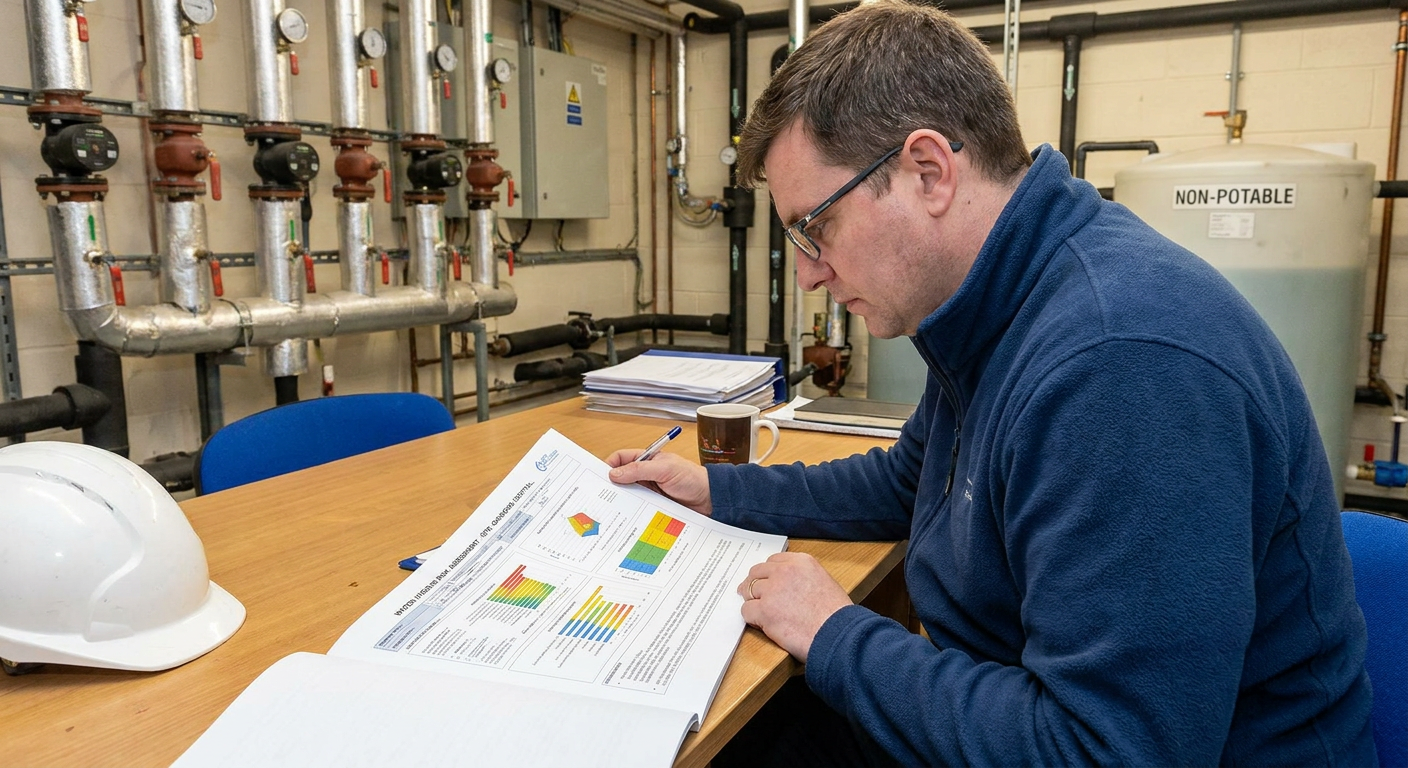
How to Read a Water Hygiene Report
A water hygiene report should not just be filed away. It should help you understand what is happening across your water systems, what risks exist, and what actions need to be taken. HSE’s ACOP L8 is aimed at dutyholders and covers identifying and assessing risk, preparing a scheme to prevent or control risk, implementing and monitoring precautions, keeping records, and
Why Compliance Should Be Proactive, Not Reactive
In water hygiene and Legionella compliance, timing is everything. Too often, action is taken after something goes wrong – a failed audit, a temperature issue, or a gap in records. But by then, the risk has already existed for some time. The difference between reactive and proactive compliance is simple: Reactive compliance manages problems.Proactive compliance prevents them. And in complex

The Top 5 Water Hygiene Risks in Commercial Buildings
When it comes to Legionella compliance, the biggest risks aren’t always the obvious ones. In fact, most issues we see come from small, everyday gaps that go unnoticed over time. Understanding these risks is the first step to controlling them. 1. Inconsistent Temperature Control Hot and cold water systems depend on maintaining the correct temperatures. When checks are missed or